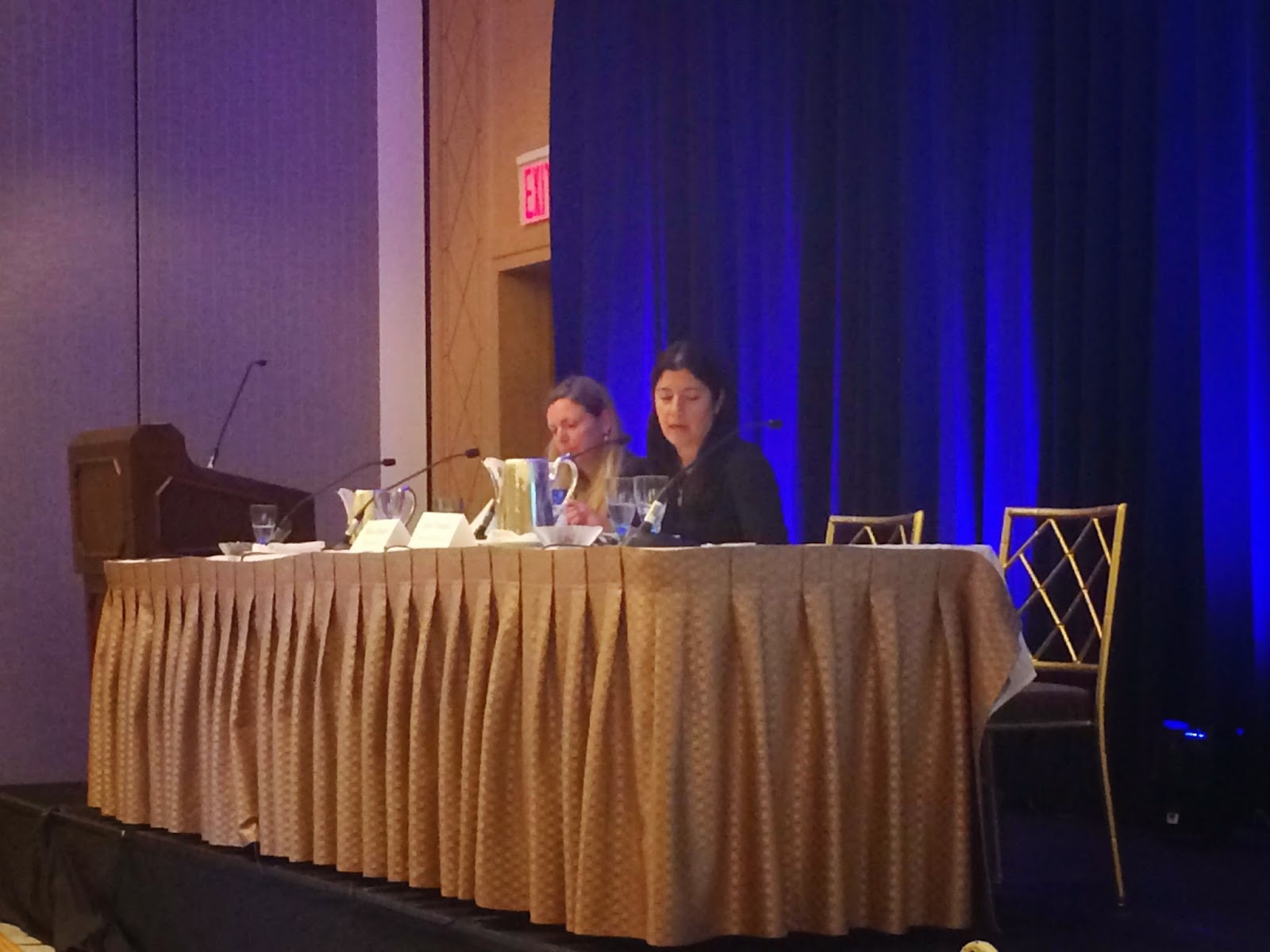
CARU's Annual Conference Was a Success

Yesterday, CARU held its annual conference at the Ritz-Carlton New York, Battery Park. The event was an excellent opportunity for industry members to discuss issues and concerns amongst the community. 

Panelists wowed attendees with a wealth of information. Discussions focused on issues facing the children's advertising industry, how online and mobile technology has changed the way companies market their products to children in the US and abroad, nuances of the modified COPPA Rule, how companies are implementing new practices to comply with these changes in their online and mobile marketing and much much more. Panelists also discussed strategies for utilizing online interest-based advertising and other third party initiatives while maintaining legal and regulatory compliance, marketing to children through non-traditional means, domestic and global challenges in self-regulation. There was even a panel advising what to consider when working with younger talent--something that many in the industry is familiar with. 

The Keynote speaker, Terrell McSweeny, urged advertisers and others covered by its Children's Online Privacy Protection Act Rule not to ignore the regulation's data security requirements, saying that the recent rash of massive data breaches has made safeguarding data vitally important. McSweeny warned that the commission plans to bring more children’s privacy enforcement cases similar to a pair of recent actions. Elliott Siebers, Deputy Attorney General in New Jersey for the Department of Law and Public Safety, predicted that state enforcers would also become more active in the area.

Thanks to our sponsors for their ongoing and generous support. 



Popular posts from this blog

20 Years Young: The History and Maturing of COPPA in a Privacy-Conscious Age

1998: A Concern for Children’s Privacy Was Born From the moment home computers had the capacity to connect to the Internet, children had the ability to use these technologies to access online websites and services. In the 1990s, concerns about children’s privacy and safety online arose amid fears of marketing practices around selling children’s personal information and exposing children’s information to predators. The Children’s Advertising Review Unit (CARU), founded in 1974, has always been on the forefront of safeguarding children’s privacy. CARU is the self-regulatory arm of the children’s advertising industry, tasked with promoting truth in children’s advertising by reviewing and evaluating child-directed ads in all media to ensure they are truthful, accurate and appropriate. CARU also monitors online privacy practices as they affect children. Before there was any legislation on the matter, CARU monitored a burgeoning Internet and observed how children’s privacy and sa...

After Review, CARU Finds Snapchat Compliant with COPPA

In a recent decision, CARU found Snap Inc.’s (Snap) Snapchat app to be compliant with both the CARU Guidelines and the Children's Online Privacy Protection Act (COPPA).  “The company goes beyond minimal procedures to prevent under-age use” CARU stated. CARU determined that Snapchat is an app directed to a general audience, not intended for use by children. In reaching this conclusion, CARU considered that Snap’s Terms of Service clearly prohibit users under 13 years of age and makes no effort to market the app to children or provide them with an appealing user experience.  With that understanding, Snapchat is permitted under the Guidelines and Children’s Online Privacy Protection Act (“COPPA”) to age-gate and block children under 13 from using its services, which it does. CARU then examined whether Snapchat does so effectively. CARU observed that Snapchat utilizes age-gates and many safeguards to ensure that if children manage to breach the existing age-...

Kids Internet Design and Safety Act Seeks to Protect Children from Harmful Online Content

United States Senators, Mr. Richard Blumenthal from Connecticut and Mr. Edward Markey from Massachusetts, introduced a new bill referred to as the Kids Internet Design and Safety Act (the “KIDS Act”). One of the Senator’s introducing the KIDS Act, Mr. Edward Markey, was the co-author of the Children’s Online Privacy Protection Act (“COPPA”). The KIDS Act seeks to include noteworthy advertising rules and create new protections for children online, specifically for online users under the age of 16. The proposed advertising rules within the KIDS Act are to ban websites from: (1) exposing young online users to advertisements “with embedded interactive elements”; (2) recommending any content involving alcohol, nicotine, or tobacco to young online users; and (3) recommending content that includes influencer marketing, like unboxing videos, or host-selling to young online users. Additionally, the KIDS Act seeks to prohibit certain online features to protect children, like prohibiting...